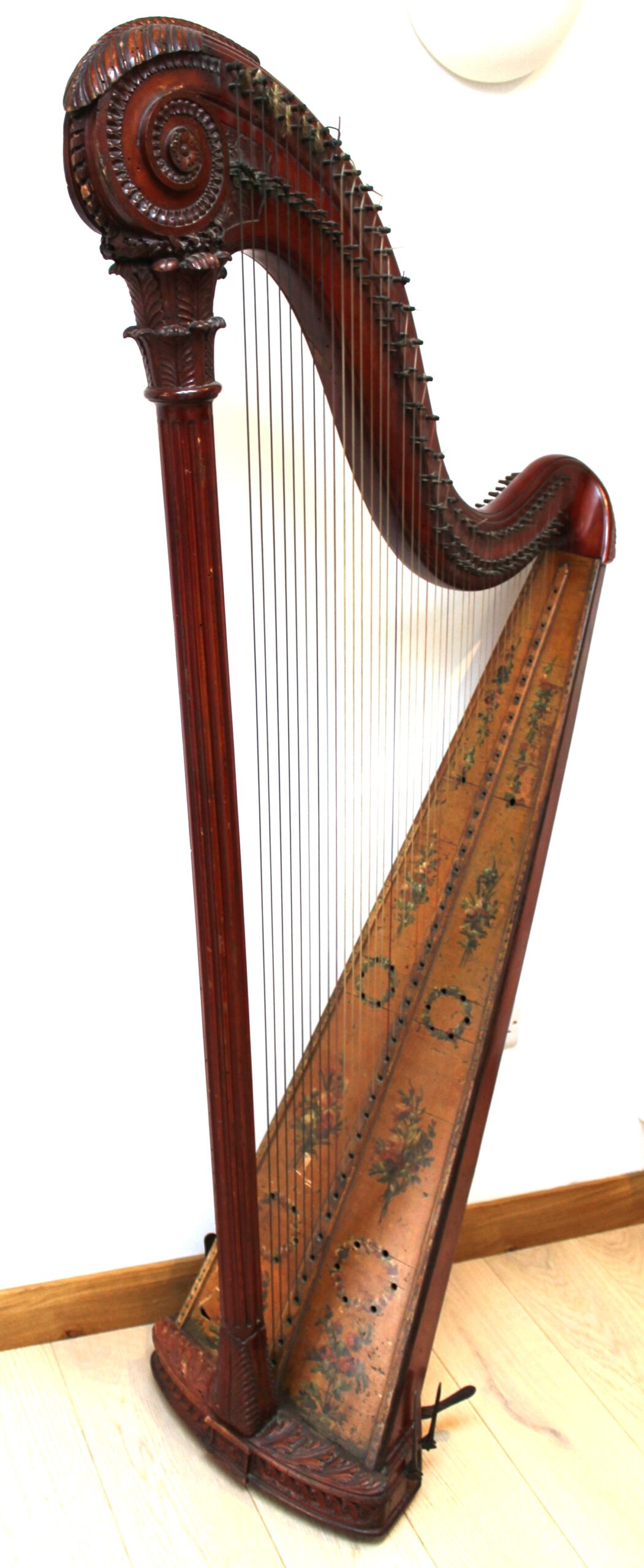
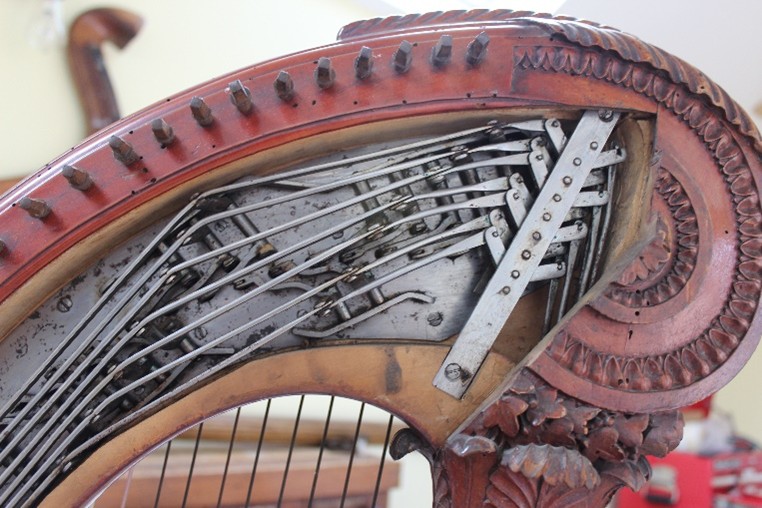
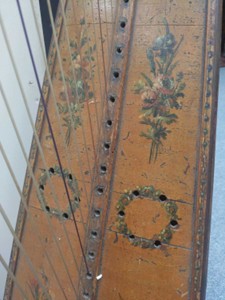
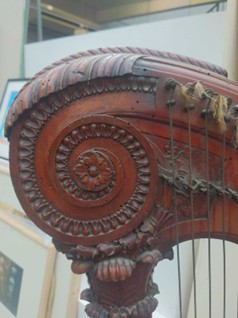
The Nadermans were an important family for harp making in the eighteenth-century Paris. Born in Westphalia in 1734, Jean Henry Naderman arrived in Paris in the early 1760s
From January 1766, he advertised in the Annonces, Affiches et Avis Divers as a harp maker. Mr Naderman, Harp Maker, informs that he makes HARPS of all sorts of calibres, to transport in the city and in the countryside. A month after this advertisement, Naderman and his wife signed a lease on a shop with housing quarters in the same rue de Charenton.
On 6 December 1772, Naderman received a certificate of luthier to the Dauphine Marie-Antoinette – harp maker to the Queen.
Marie Elisabeth Maheux, Naderman’s wife, passed away in 1776, and the harp maker remarried to Barbe Rose Courtois in the town of Angerville, near Paris. The couple welcomed their first child a year later, François Joseph, and a second one in 1783, Henry Pascal. Upon Jean Henry Naderman’s death in 1799, his widow and sons took over the business of musical instrument making. The family continued to produce pedal harps into the 1820s, while François Joseph became a harp teacher in the Paris Conservatoire.
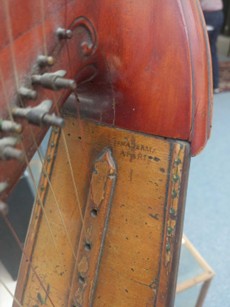
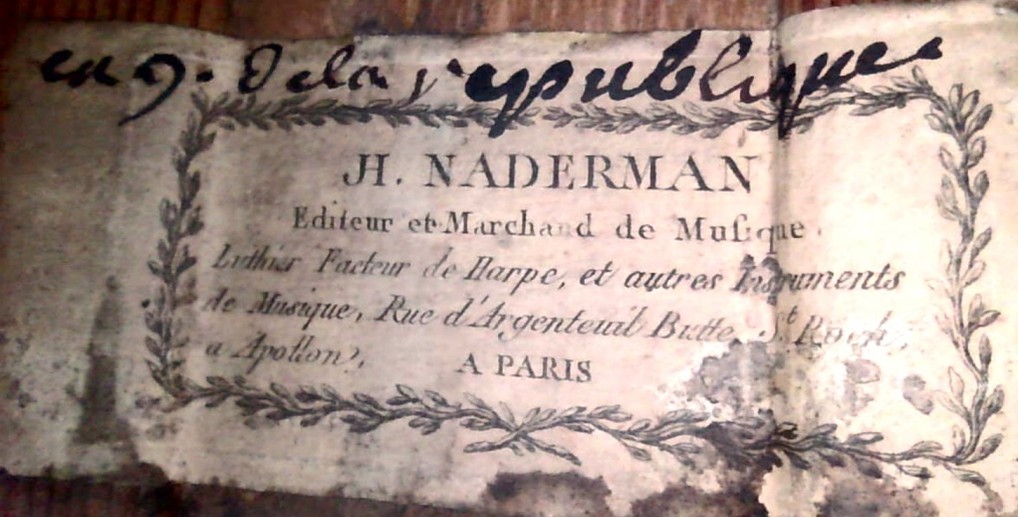
The label in this instrument is fixed to the inside of the back so would only have been viewable if the front was removed, this photo was taken using a modern endoscope through one of the holes in the soundboard.
The handwritten part actually reads “an 9 de la République”, which corresponds to 1800-1801. Following the Revolution a new calendar was put in place to replace the Gregorian one, and used 1792 (creation of the first Republic) as Year 1.
Based on this although the label refers to J H Naderman, in reality it would have been completed by his family.