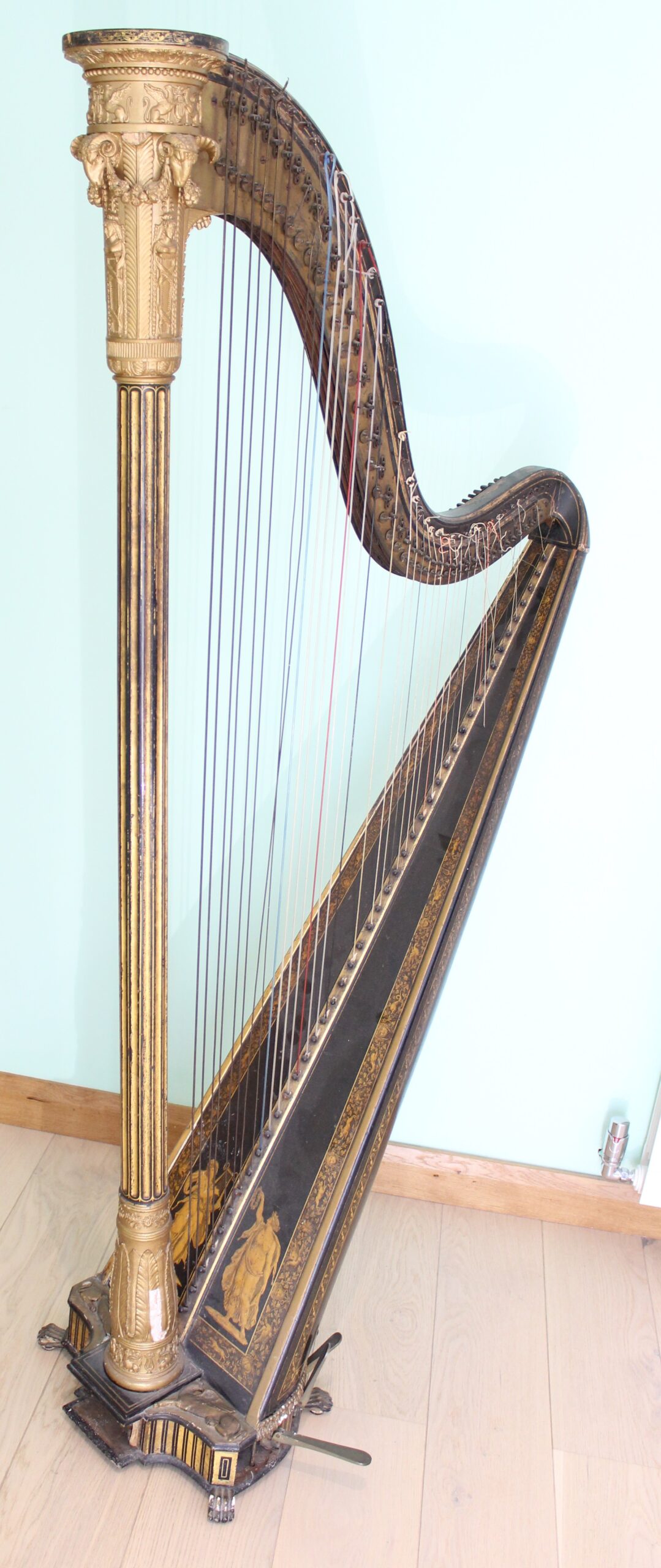
Erard Single Action Empire 1811

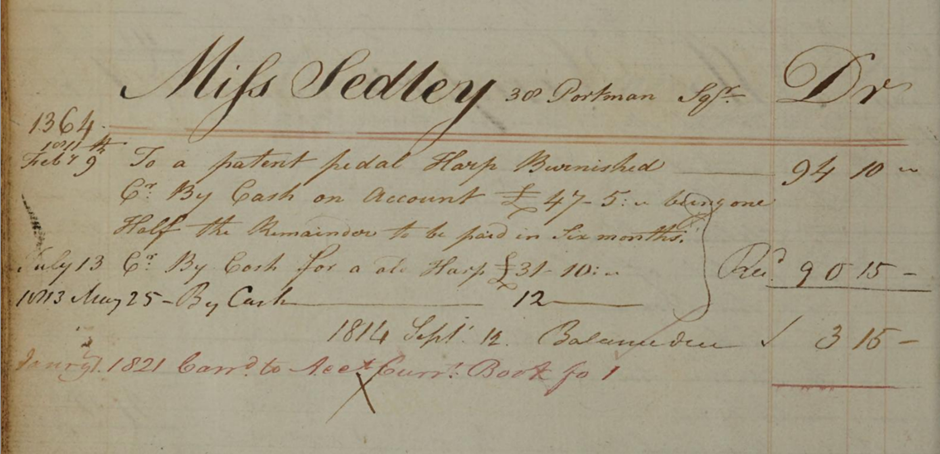
A single action Empire pedal harp decorated in the Neo Classical style by Sebastian Erard from February 1811

Other than a few glue joints and small decorations needing attention, a good clean and new strings will have this instrument playing again. The decoration is all original along with the swell doors operating and once the top and bottom of the column has been regilded, it will look as though it has just come out of the maker’s workshop.

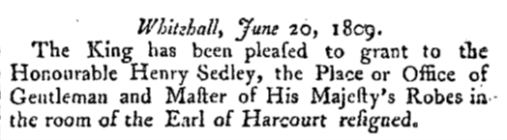
The original owner was a Miss Sedley of Portman Square. On 18th June 1813 as the next heir to the title, Henry Sedley became 3rd Lord Vernon after his half brothers death and at this point his and his children’s surname was changed from Sedley to Venables Vernon.

There were two sisters:

Louisa Henrietta Sedley 1788 – 1861, later Venables Vernon, married Reverend Brooke Boothby on 4th November 1816, at Sudbury, Derbyshire. Her husband was the son of Major Sir William Boothby, 7th Baronet and British military officer. Together, Louisa and Brooke Boothby had six children: five sons and one daughter. She remained in the Sudbury area and died there on 6th March 1861.

Catherine Sedley  1781 – 1867

Catherine Sedley later Venables Vernon never married. She remained in London and is shown on the 1851 and 1861 censuses living at Bolton Street, Piccadilly, which is where she died on 29th April 1867.

It appears that the family were very well connected to the Royal Family as their father Henry was appointed to the Office of Gentlemen and Master of His Majesty’s Robes.1

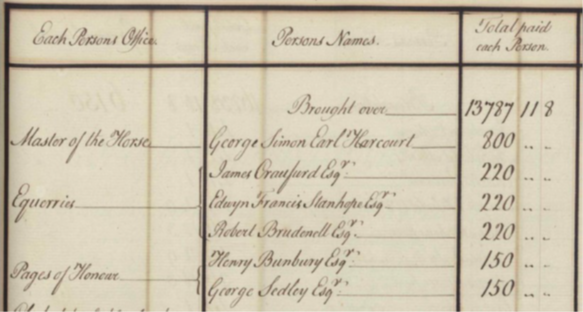
Their brother George held a role in the royal household as Page of Honour.

Their uncle Edward Vernon Harcourt (1757-1847) attended Cambridge University, was the Bishop of Carlisle from 1791 to 1807 and Archbishop of York until his death.

The sisters lived with their aunt Elizabeth Countess Harcourt who served both as Mistress of the Robes and Lady of the Bedchamber to Queen Charlotte (1744 – 1818).

Her position as the confidante of the queen was described:

“Lady Harcourt, daughter-in-law of the Lord Harcourt who some five-and-twenty years before had been despatched to Strelitz to arrange the marriage, had always continued on terms of the most affectionate intimacy with the queen. She was one of her ladies, and to her the queen unbosomed her thoughts and feelings in the most confidential way; for no family, as we have said, did the royal pair show such an unbounded affection.”

Many letters from the correspondence between Elizabeth Harcourt, the queen and other members of the royal family are preserved.

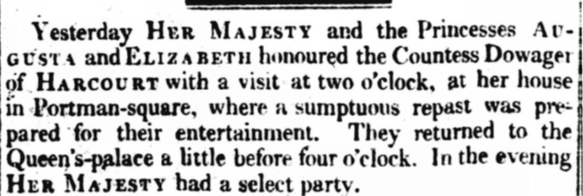
It was reported that Queen Charlotte and two of her daughters visited the Countess Dowager of Harcourt at her house in Portman Square in June 1816 so it’s quite possible that they saw and were entertained by this very harp. The Queen herself was a very accomplished harpist.
We use using cookies on our website for analytical purpose only.

Please confirm, if you accept our cookies. You can also decline the tracking, so you can continue to visit our website without any data being collected.