Erard Single Action Empire 1805

Robert St John Lucas of Bath

Erard Single Action Empire 1805

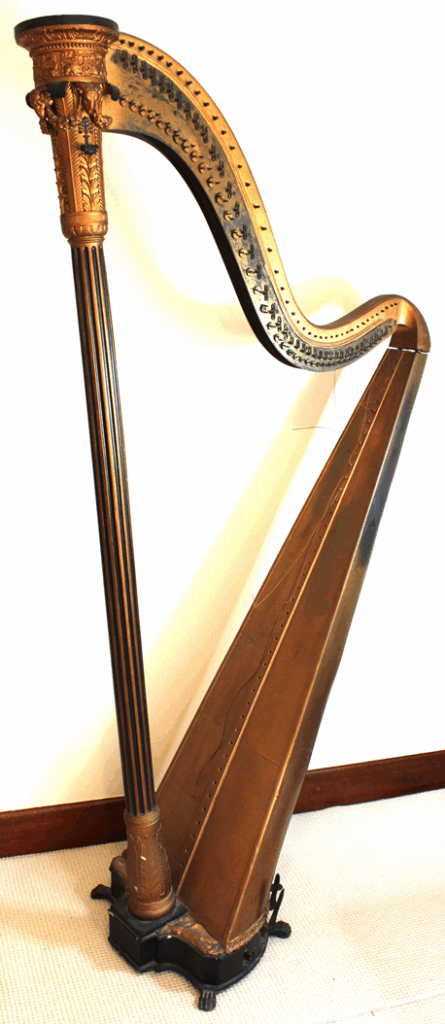
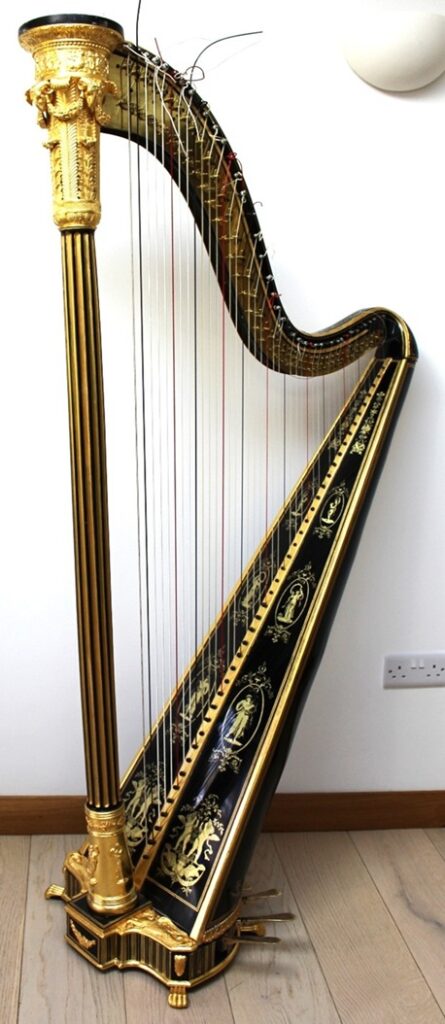
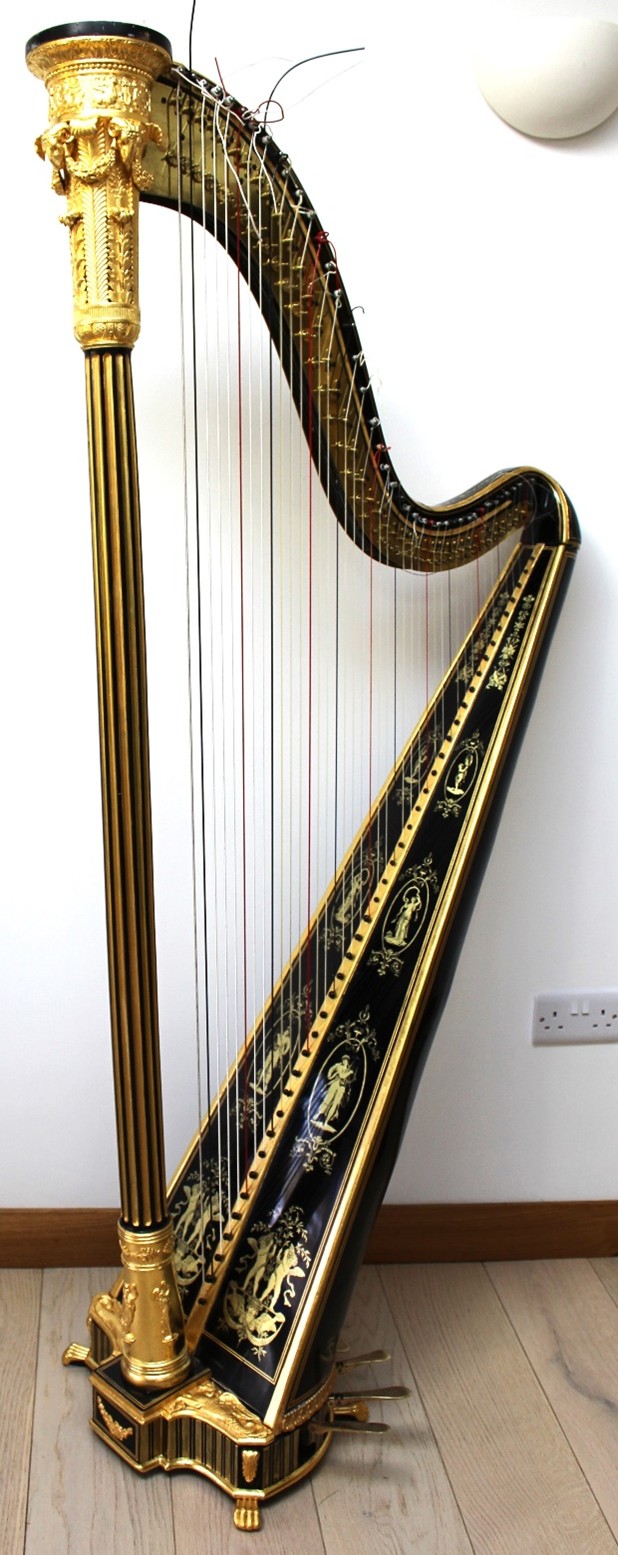
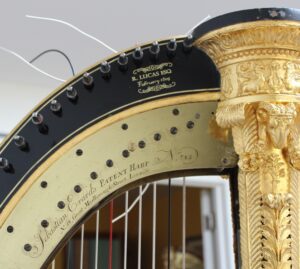
On February 27th 1805 (8 months before the battle of Trafalgar) R. Lucas Esq of Bath purchased an “Empire” pedal harp number 742 from the London showrooms of Sebastien Erard for the sum of £79.16 – around £11,000 in today’s money.

The clip below shows the entry in the original Erard company’s ledgers held in the Royal College of Music

At some stage in its past the harp had been sprayed all over with bronze car paint, possibly to use as a prop in a theatre or school production.

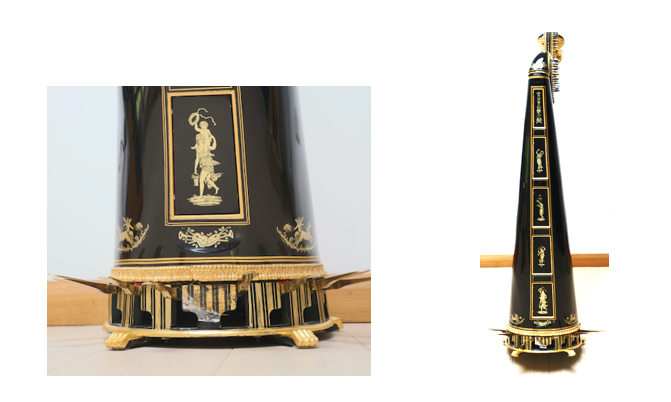
It’s been stripped back to the bare wood, which was in remarkably good condition, but unfortunately all traces of the original decoration had been removed other than for some odd reason, the central block in the pedal box. That’s been kept for posterity, below;

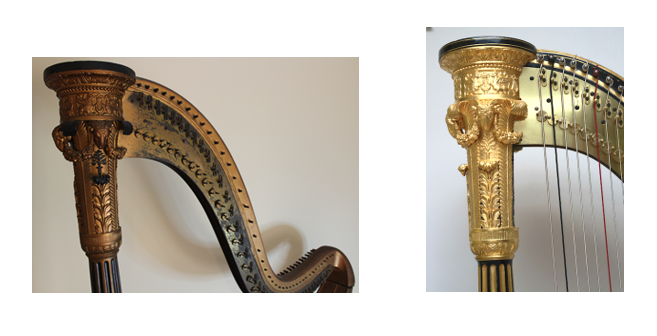
The entire instrument has been refinished, new decoration applied in the “Neo Classical “style, the mechanism has been cleaned, reassembled and re oiled and was regulated recently by Pilgrim harps. The rear swell doors are fully functional, the carvings and mouldings are all original and have been oil gilded with 23.5 carat gold leaf.

It’s now strung to concert pitch with Bow Brand low tension gut strings and silver wire wound on silk for the bass strings. This is probably the best sounding of all of the instruments here.

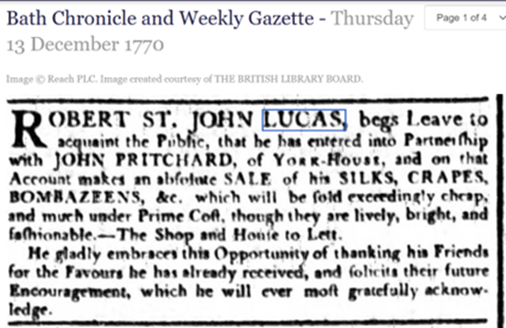
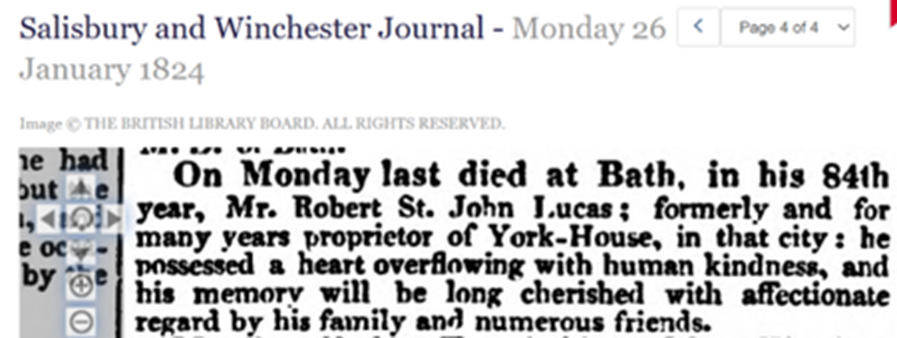
Robert St John Lucas was born in 1741 and was in business in 1770 in Bath as a silk mercer – a merchant dealing in fabrics and textiles, especially silks and other fine cloths.

He inherited lands around Abergavenny when his parents died and £200 from his uncle James Parry – around £31,000 in today’s money (2025) all of which probably enabled him to enter into a partnership in the York Hotel. He also used some of the funds to speculate in several prestigious property deals in the city.

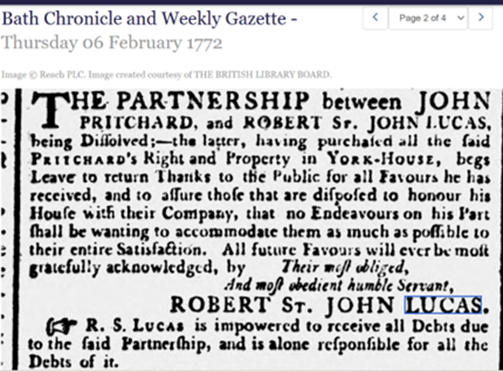
Lucas had been in partnership with John Pritchard running the York Hotel in Bath but the partnership was dissolved in 1772 and Robert purchased all the contents of the Hotel and ran it on his own.

Robert would have been 64 in February 1805 when he buys the harp and assuming that the purchase wasn’t for him, it was possibly for his daughter Mariana who was 24 in 1805.

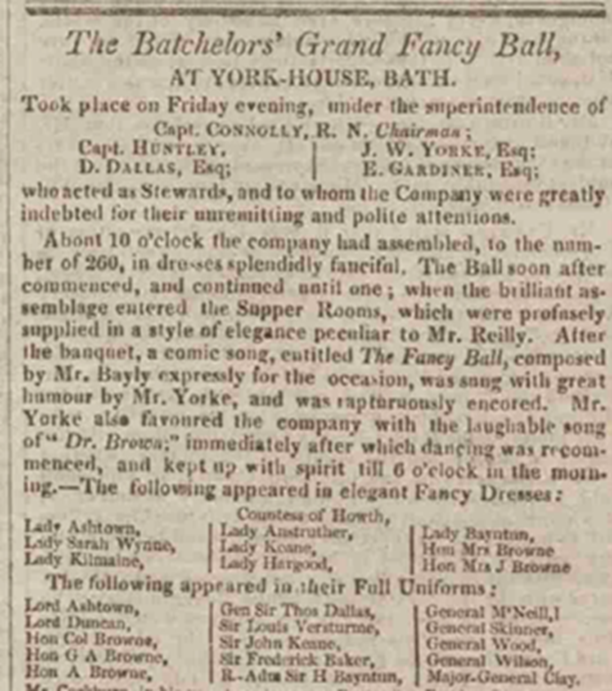
However, an alternative use for the harp was quite probably as a “house” instrument at the York Hotel to entertain the patrons which at the time boasted a coffee house, ballroom and restaurant and was a central part of the Bath social scene.

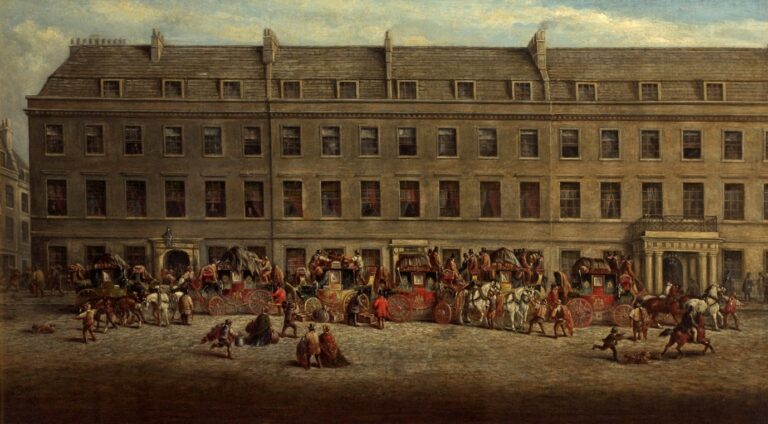
YORK HOUSE opened on George Street in 1769 and much appreciated by the snobbish Philip Thicknesse in his 1778 guide to Bath:

“An excellent Hotel, the only House of Reception which is situated in an open, airy Part of the City; and to the Advantage of its excellent Situation, the Stranger will find what can be found scarce anywhere else in England, a sensible honest Host, who is not only a Man of good Family, but one who has had a liberal Education: From such a Man, every Person who comes to his House is sure of meeting with Politeness, Diffidence, and a proper Reception

When York House is full, the Bear is the next best Inn, and, for People of inferior Rank, the Greyhound, or the White Lyon in the Market Place.”

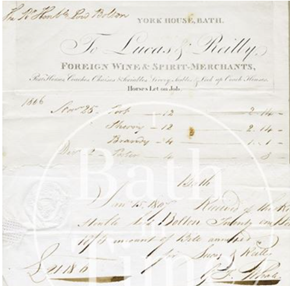
In Baileys directory for 1784 Robert Lucas was listed as a wine merchant, a neat side line for a hotelier.

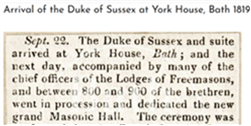
Prince Augustus, Duke of Sussex (27 January 1773 – 21 April 1843), was the sixth son of George III and Queen Charlotte.

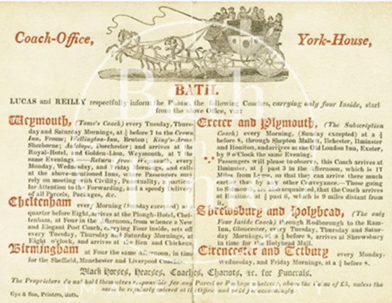
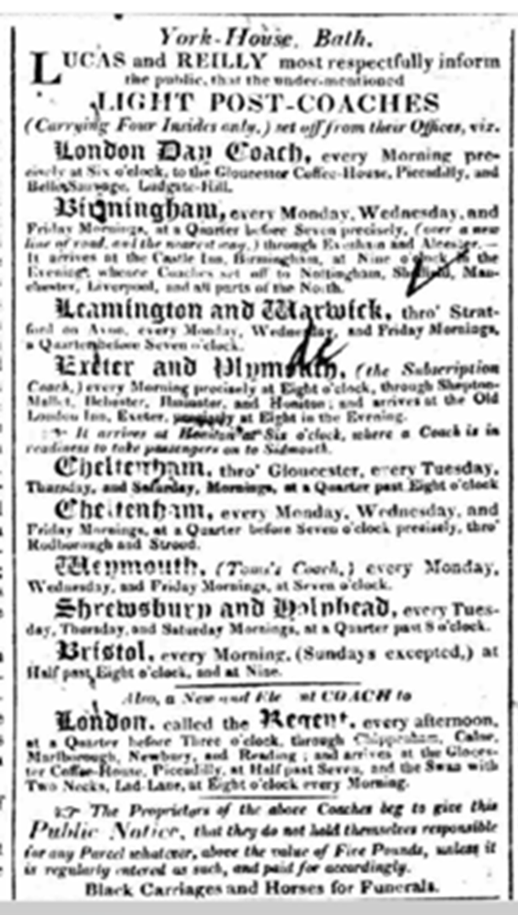
By 1817 Lucas was in Partnership with Bradshaw Reilly operating a popular coach service to several destinations along with a daily coach to Lundon. This appears to have continued until the 1840’s when the Great Western Railway arrived in Bath

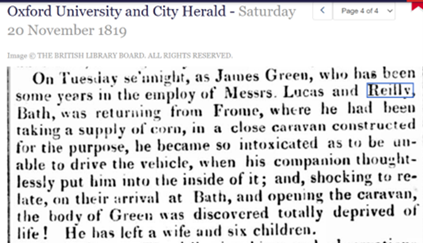
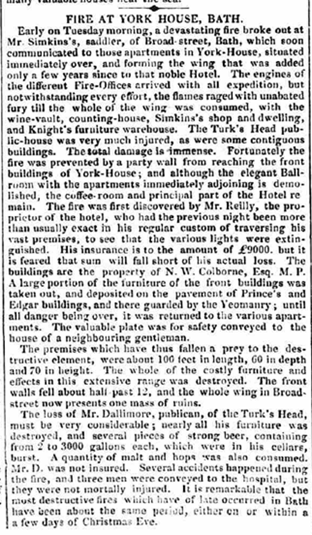
Running a hotel was not always fun;

Tenuous Jane Austin Connections.

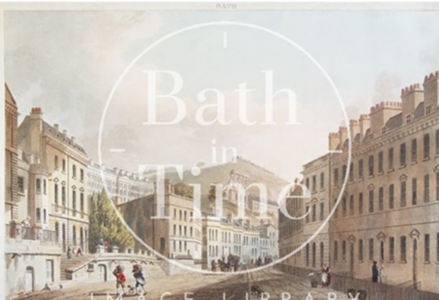
The Lucas family lived in number 17 Paragon buildings, above, Baths very fashionable residential address, from 1794 until his death in 1824. Robert’s son, Robert Hayward Lucas 1774 – 1844 was an Apothecary and Surgeon and had a surgery there till 1817.

Jane Austen first arrived in Bath in 1801 and continued to visit regularly until 1806. At the time of her first visit, Jane Austen’s aunt and uncle, the Leigh Perrot’s, owned No.1 The Paragon. It was here that Jane Austen, and her mother, Cassandra Leigh, would initially reside.  

For many years the Leigh-Perrots were quite happy spending their summers at Scarlets and their winters in Bath. From their home at Number One, the Paragon, they were able to enjoy society, take the waters, and offer their nieces from Steventon a chance at seeing something of the world. Surely young Catherine Morland’s visit to Bath in Northanger Abbey is taken from Jane Austen’s own first visit there in 1797?

In 1800 Mrs Leigh-Perrot, Janes aunt, was accused of stealing some ribbon from a linen drapers and was sent to trial. https://janeausten.co.uk/blogs/extended-reading/the-life-and-crimes-of-jane-leigh-perrot. Robert Lucas was also a silk mercer – a merchant dealing in fabrics and textiles, especially silks and other fine cloths and was located in the next street over from the linen drapers. It must have been the talk of the coffee house and hotel at the time!
We use using cookies on our website for analytical purpose only.

Please confirm, if you accept our cookies. You can also decline the tracking, so you can continue to visit our website without any data being collected.