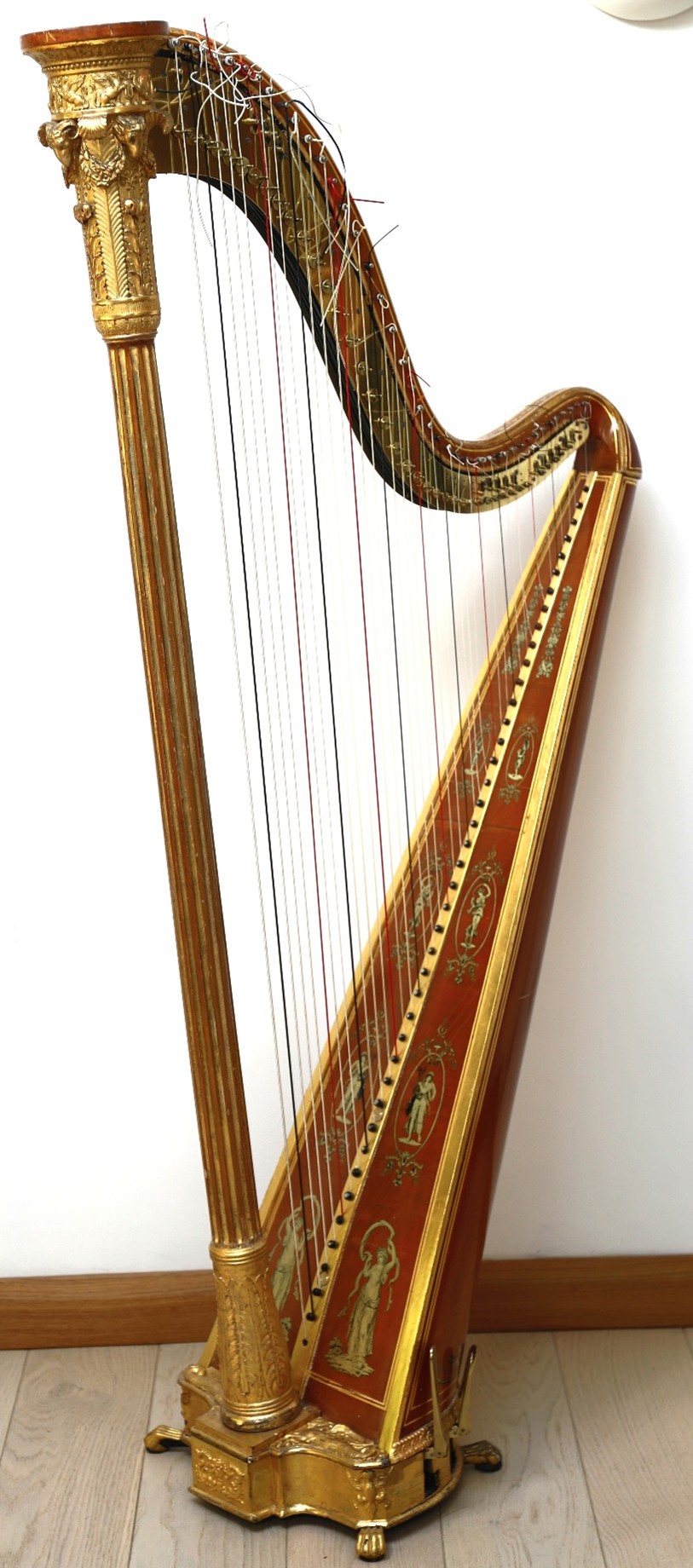
Sebastian Erard “Empire” single action pedal harp number 660, 9th May 1804.
The instrument is decorated in the “Neo Classical “style which was popular at the time and inspired by the “Grand Tour”.
It had a new front fitted in 1907 by a chap called Miller in Bristol and is now strung to concert pitch with Bow Brand low tension gut strings and silver wire wound on silk for the bass strings. The mechanism has been cleaned, reassembled and re oiled and was regulated recently by Pilgrim harps. The decoration and mouldings are all original but the original gilding has been painted over in some places.
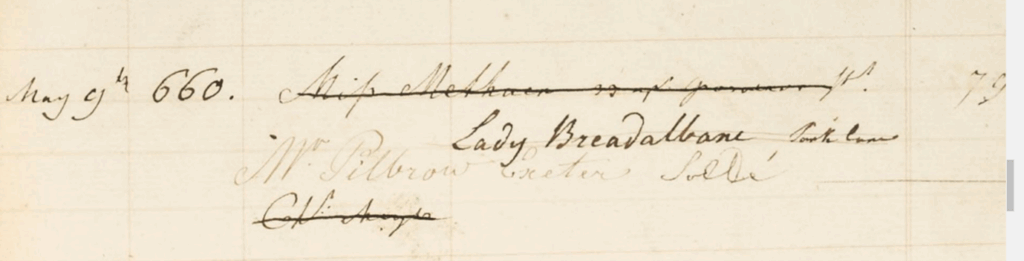
On 9th May 1804 Lady Breadalbane of Park Lane brought an “Empire” single action pedal harp number 660 from the famous Harp and Piano maker Sebastian Erard from his showrooms in Great Marlborough Street.
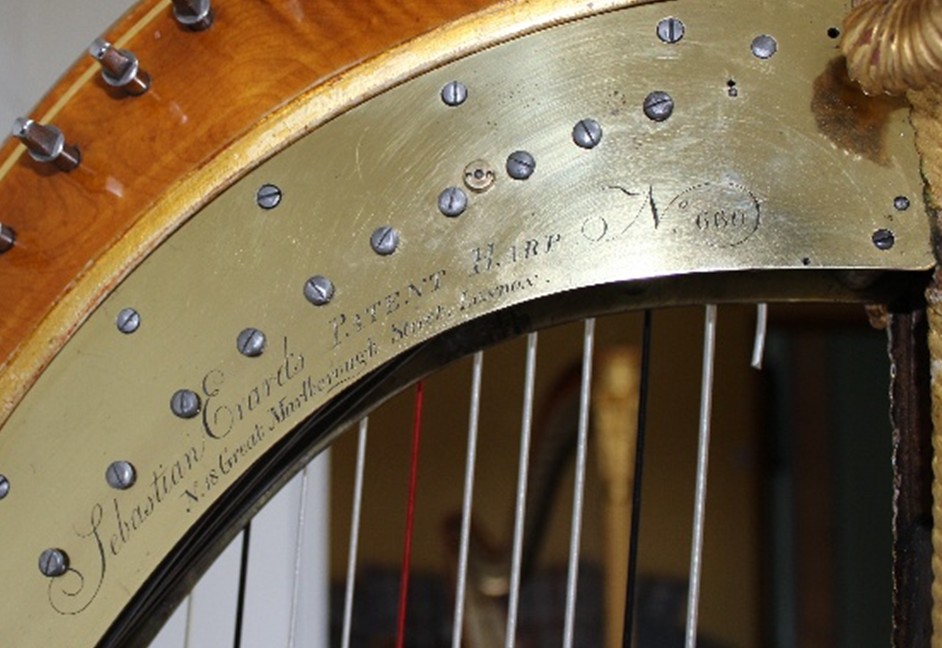
Each instrument had a serial number engraved on the mechanism plate, above, that was recorded in the workshop ledgers which are now housed in the Royal College of Music’s library.
Breadalbane House in Park Lane was the families London residence from 1770 until it was demolished in 1863. It’s now the site of the Dorchester Hotel.
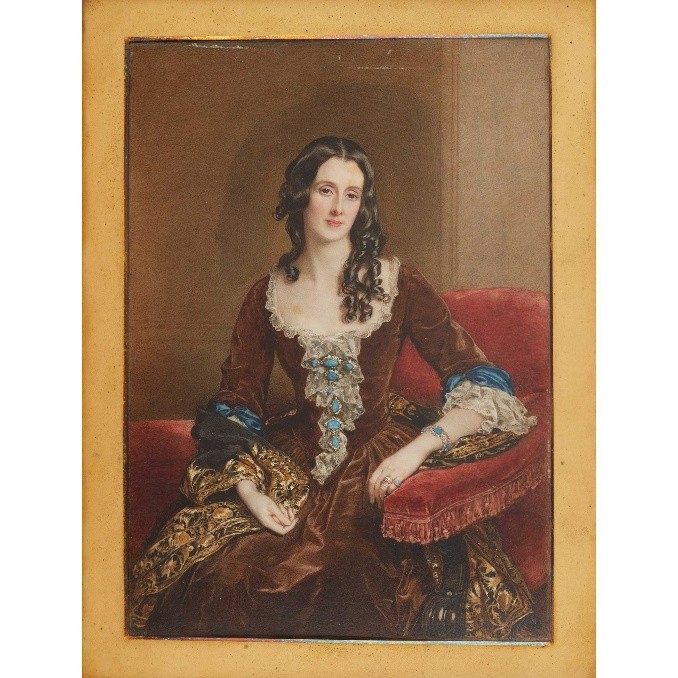
The original owner of the harp was Lady Mary Gavin Campbell, wife of John Campbell, the 1st Marquess of Breadalbane whom she married in 1793. After her marriage she was styled Countess of Breadalbane and Holland and from 1831, Marchioness of Breadalbane. She died in 1845.
The Breadalbane family were very close to the Royal Court as Lord Breadalbane was the Scottish banner bearer at the funeral of King George III, in 1819, over a thousand Breadalbane tenants paraded to greet Prince Leopold, later King of the Belgians, Queen Victoria and Prince Albert visited Scotland for the first time in September 1842 and during their visit, were guests of the Breadalbane’s at Taymouth Castle in Perthshire. The family also had a permanent apartment at Holyrood Palace, the official residence of the British Monarch in Scotland.
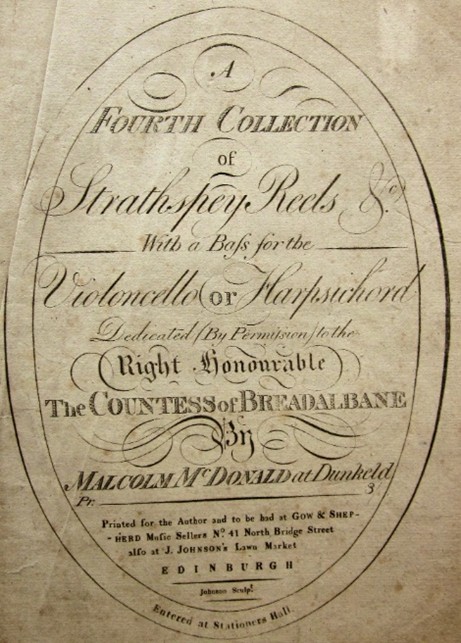
Mary was very musical herself and often had pieces dedicated to her.
We use using cookies on our website for analytical purpose only.
Please confirm, if you accept our cookies. You can also decline the tracking, so you can continue to visit our website without any data being collected.