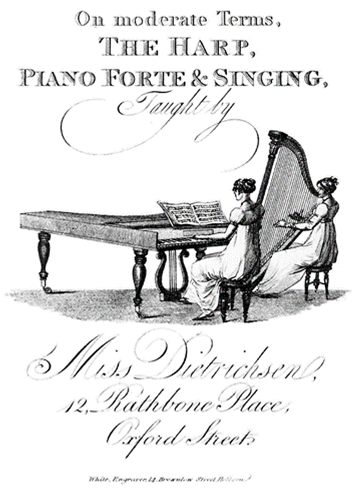
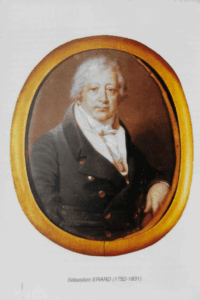
During the early nineteenth century, the harp was transformed into a sophisticated instrument that became as popular as the piano. One of the most important figures in this process was Sébastien Erard (1752–1831), a tireless inventor and prolific manufacturer of harps and pianos operating branches in Paris and London.
From around 1798 the Erard London branch began producing single-action harps based on Sébastien Erard’s 1794 patent. The single-action harp with fourchettes became known as Erard’s ‘Empire’ model, a term that referred to its decoration in the Empire style that was prevalent in Europe during the Napoleonic Wars from about 1800 to 1815.
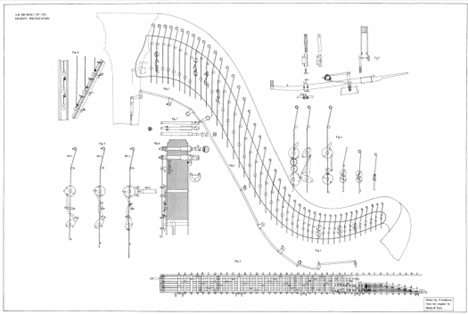
With the introduction of the so-called ‘Grecian’ model, the first commercially-built double-action harp, in London in 1811, Erard managed to establish the double-action harp not only as a fashionable, state-of-the-art instrument, but also as a powerful symbol of taste, wealth and status. Erard’s new harp was an instant success among professional and amateur musicians and is widely considered to be the predecessor of the modern concert harp.
The above notes taken from; The Erard Grecian Harp in Regency England by Panagiotis Poulopoulos ISBN 978-1-78327-772-8 published by https://boydellandbrewer.com
“The quality of finish on the brass mechanism, gilding, and decoration of the restored antique harps we have seen from Harp Revive is just as good as—if not better than—some modern mechanisms. The attention to detail is truly impressive.”
The Pilgrim Harps team
“Engaging ‘Harp Revive’ to develop and produce the display in our refurbished musical instrument exhibition was an easy and good choice due to their enthusiasm, expertise, and in-depth technical knowledge of the construction methods and materials used in early harps.”
Dr. Panagiotis Poulopoulos, Deutsches Museum, München
Unique Historical Sound & Craftsmanship
Antique pedal harps—especially those from the 18th–19th centuries—were built with tonal qualities and materials that aren’t replicated today. Their sound is often described as warmer, more intimate, and richer in character than modern harps.
Artistic & Aesthetic Value
Antique harps are hand-carved, gilded, and artistically decorated. Playing one feels like making music with a piece of fine art, not just an instrument. This can enhance both performance atmosphere and personal inspiration. Like most antiques, a well-maintained antique harp may appreciate in value over time, potentially holding or increasing its value.
Historical Playing Experience
These harps offer a closer connection to the music of earlier periods, particularly Classical and Romantic repertoire. They allow harpists to explore pieces in a way that is more authentic to how composers originally heard them.
Balanced Tension and Responsiveness
Antique pedal harps often have lower string tension and a lighter construction than modern concert harps, making them easier to manoeuvre and sometimes more responsive to nuanced touch compared to concert or lever/folk harps.
Cultural and Personal Prestige
Owning and playing a restored antique pedal harp carries cultural cachet—not only is it a finely crafted instrument, but it represents preservation of musical heritage. It can also set a harpist apart for performances, recordings, or teaching.